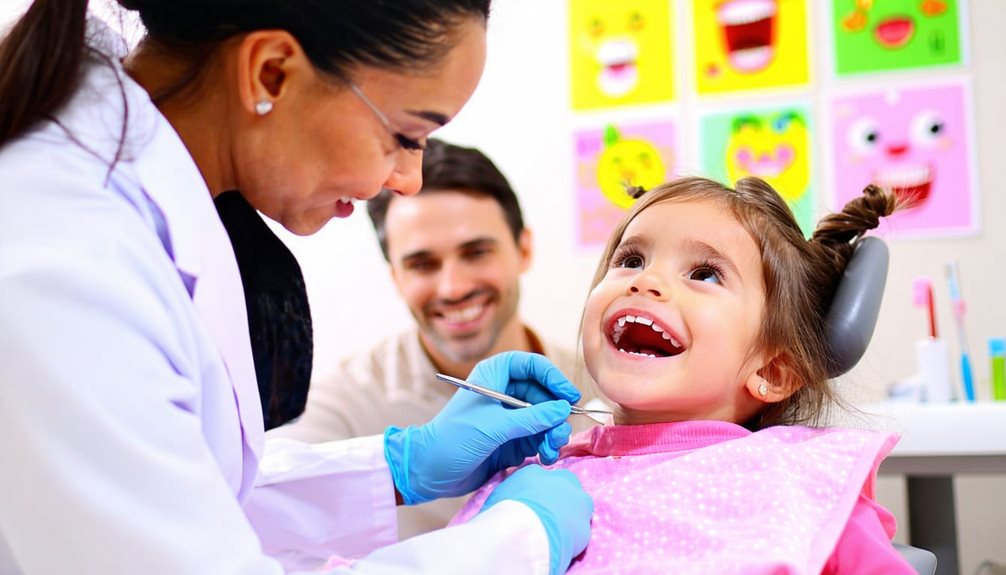
Affordable dentists are considered gems due to their commitment to providing quality dental care through community-based initiatives and accessible financial structures. They employ sliding scale fees and discount plans, allowing payment adjustments according to income. These clinics often partner with government programs like Medicaid, expanding coverage for underserved populations. Dental schools, with their supervised student clinics, offer cost-effective services while ensuring high standards. Preventive care is prioritized to minimize long-term costs and maintain oral health. Accessibility is further enhanced by telehealth services and mobile clinics. More insights into these strategies will reveal the essential support they offer.
Community-Based Clinics
Community-Based Clinics play an essential role in providing affordable dental care to underserved populations. These clinics strategically implement community outreach programs to bridge gaps in healthcare access, ensuring that marginalized groups receive necessary dental services. By leveraging local partnerships and resources, they effectively extend their reach, offering preventive and restorative dental treatments.
This outreach not only addresses immediate oral health needs but also fosters long-term well-being through continuous care.
Patient education is a cornerstone of these clinics’ operations. They educate patients on the importance of oral hygiene, disease prevention, and the impacts of neglected dental health. Such educational initiatives are vital for empowering individuals to take charge of their oral health, ultimately reducing the prevalence of preventable dental conditions.
Community-Based Clinics employ innovative teaching methods, including interactive workshops and digital platforms, to engage and inform diverse audiences effectively.
The integration of community outreach with patient education creates a sustainable model for improving public health outcomes. This dual approach not only enhances access to dental care but also cultivates a culturally competent environment where patients feel understood and supported.
In doing so, Community-Based Clinics stand out as pivotal contributors to equitable and progressive healthcare systems.
Sliding Scale Fees
Sliding scale fees are an essential component in making dental care accessible, as they offer tailored payment options based on an individual’s financial capacity.
By adjusting costs relative to income levels, these fees guarantee that patients receive necessary dental services without facing undue financial burdens.
This system effectively bridges the gap between standard pricing structures and the economic realities of underserved populations.
Tailored Payment Options
Many dental practices recognize the financial barriers that patients face and have consequently implemented tailored payment options, such as sliding scale fees, to enhance accessibility to oral healthcare. This strategic approach in tailored financing is designed to align with the economic diversity of the patient demographic, thereby ensuring that financial constraints do not impede the pursuit of essential dental care.
By offering flexible payment solutions, dental practices can accommodate a broader spectrum of income levels, thereby reinforcing their commitment to inclusive patient care.
Tailored payment options are particularly innovative as they provide a structured yet adaptable framework for patients. This flexibility allows individuals to receive necessary treatments without the burden of upfront costs, thereby fostering a proactive approach to dental health.
The implementation of sliding scale fees exemplifies a dynamic adaptation to the economic realities faced by patients, making dental care more accessible and affordable.
Moreover, this model not only enhances patient satisfaction but also encourages regular engagement with dental services. By mitigating financial concerns, dental practices can focus on delivering high-quality care, ultimately contributing to improved oral health outcomes across diverse populations.
Such initiatives underscore the essential role of financial adaptability in modern dental practice management.
Income-Based Adjustments
Income-based adjustments, specifically sliding scale fees, represent a key mechanism by which dental practices tailor financial solutions to individual patient needs. This innovative approach enables dental service providers to expand access to care by adjusting fees based on a patient’s income level, thereby offering income assistance to those who may otherwise forego necessary dental treatments.
Sliding scale fees are meticulously structured to account for variations in household income, ensuring equitable service provision without compromising quality.
Incorporating sliding scale fees requires a thorough understanding of financial literacy, both on the part of the dental practice and the patient. By educating patients about the intricacies of income-based adjustments, practices foster an environment where individuals are empowered to make informed financial decisions regarding their oral health.
This financial literacy is essential, as it allows patients to navigate the complexities of cost structures and maximize their access to affordable care.
For dental practices, implementing sliding scale fees involves precise calculation and documentation procedures to maintain transparency and fairness. By leveraging modern financial management software, practices can efficiently manage these adjustments, ensuring compliance with regulatory standards while maintaining the integrity of their services.
This strategic approach not only enhances patient satisfaction but also fortifies the practice’s commitment to community health.
Dental Schools
For individuals seeking affordable dental care, dental schools present a viable option where quality services are provided at reduced costs. These institutions not only serve as educational venues for aspiring dentists but also as practical platforms where dental education is applied in real-world scenarios.
Student clinics within these schools are integral to the learning process, offering an array of dental services under the supervision of experienced faculty members. This dual role of training future dental professionals while delivering care guarantees that patients receive attention grounded in the latest methodologies and innovations in dental healthcare.
Dental schools are equipped with state-of-the-art technology and are committed to advancing both education and patient care. Students, in their final stages of training, perform procedures ranging from routine check-ups to more complex dental treatments, guaranteeing thorough care.
Each procedure is meticulously overseen by licensed professionals, thereby maintaining high standards of quality and safety. This collaboration between students and faculty fosters an environment where cutting-edge techniques are employed, aligning with the goal of providing effective and innovative dental solutions.
Consequently, dental schools not only contribute to the development of skilled professionals but also offer a cost-effective solution for those seeking affordable dental care.
Discount Plans
Maneuvering the landscape of affordable dental care can often lead individuals to contemplate discount plans as a strategic option for reducing costs. These plans, distinct from traditional insurance, offer a membership-based model where individuals pay a monthly or annual fee to access reduced rates on dental services. The discount benefits provided can considerably alleviate financial burdens, making routine care more accessible.
Unlike conventional insurance, discount plans generally have no waiting periods, deductibles, or annual maximums, thereby providing immediate cost savings.
A critical element when evaluating these plans is conducting thorough plan comparisons.
Additionally, comparing the costs of the plan against potential out-of-pocket savings facilitates informed decision-making.
In a market driven by innovation and cost-effectiveness, discount plans present a viable alternative for those seeking to maintain oral health without the financial strain typically associated with dental care. As these plans evolve, they continue to offer an innovative solution for bridging the gap between necessary dental care and affordability.
Government Programs
Government programs play a pivotal role in providing affordable dental care options for underserved populations. By leveraging government assistance, these programs guarantee that essential dental services are accessible to individuals who may otherwise face financial barriers. Examples of such initiatives include Medicaid and the Children’s Health Insurance Program (CHIP), which offer dental benefits to qualifying participants. These programs are designed to bridge the gap in oral healthcare access, guaranteeing that preventive and restorative care is not a privilege but a right.
To optimize accessibility, government initiatives employ innovative strategies that cater to the dynamic needs of diverse populations. By incorporating telehealth services and mobile dental clinics, they extend their reach to remote and rural areas, thereby minimizing geographic limitations. This forward-thinking approach not only enhances service delivery but also promotes a broader understanding of the significance of oral health.
Furthermore, government assistance programs often collaborate with educational institutions and non-profit organizations to develop community-based outreach initiatives. These partnerships aim to raise awareness about dental benefits, encourage regular check-ups, and foster a culture of preventive care.
Such integrative efforts reflect a commitment to not merely providing affordable dental care, but also to instilling long-term health consciousness within the communities they serve.
Preventive Care Focus
Preventive care is a fundamental component of maintaining oral health, emphasizing the importance of regular dental check-ups and early intervention strategies. This approach is pivotal in identifying potential oral health issues before they escalate into more serious problems.
Affordable dentists, recognized as gems within their communities, prioritize preventive care, thereby reducing the long-term costs of dental treatments for patients. They offer extensive preventive education, empowering patients with the knowledge to maintain ideal oral hygiene practices at home.
Routine checkups are integral to this preventive care model, enabling dentists to monitor changes in oral health and promptly address issues such as plaque buildup, cavities, and gum disease.
These regular visits also facilitate the early detection of more severe conditions, such as oral cancers, greatly improving patient outcomes. The innovation lies in the dentists’ commitment to integrating state-of-the-art diagnostic tools and techniques, ensuring high-quality care is accessible to all.
Frequently Asked Questions
How Do Affordable Dentists Maintain High-Quality Care?
Affordable dentists maintain high-quality care by employing cost-effective techniques, leveraging advanced technology, and emphasizing efficient resource management. This strategic approach guarantees patient satisfaction by delivering ideal outcomes without compromising on the quality or accessibility of dental services.
What Qualifications Do Affordable Dentists Typically Have?
Affordable dentists typically possess qualifications including a thorough dental education, licensure, and ongoing professional development. Their affordability often stems from streamlined operations and innovative practices, ensuring quality care while maintaining cost-efficiency without compromising their expertise or patient outcomes.
Are Affordable Dentists as Experienced as More Expensive Ones?
In the experience comparison between affordable and more expensive dentists, cost perception often differs. Affordable dentists can possess equivalent experience and skill, challenging traditional views that higher costs inherently signify superior expertise within dental practice.
How Do Affordable Dentists Stay Updated With Modern Dental Practices?
Affordable dentists maintain proficiency in modern dental practices through continuing education and technology integration. These strategies guarantee they remain competitive, adopting innovative techniques and state-of-the-art equipment to provide quality care while managing costs effectively.
What Measures Ensure the Safety of Treatments at Affordable Dental Clinics?
Affordable dental clinics guarantee patient safety and uphold treatment standards by implementing rigorous sterilization protocols, utilizing advanced diagnostic tools, and adhering to evidence-based practices, thereby aligning with industry regulations and fostering a commitment to continuous professional development and innovation.
Conclusion
Affordable dental care can be effectively achieved through various avenues. Community-based clinics provide essential services at reduced costs, often supported by public funding. Sliding scale fees adjust costs based on income, enhancing accessibility for lower-income individuals. Dental schools offer affordable care through supervised student work. Discount plans and government programs further alleviate financial burdens. A focus on preventive care reduces long-term costs by addressing issues early. Collectively, these strategies demonstrate viable solutions for affordable dental care provision.