
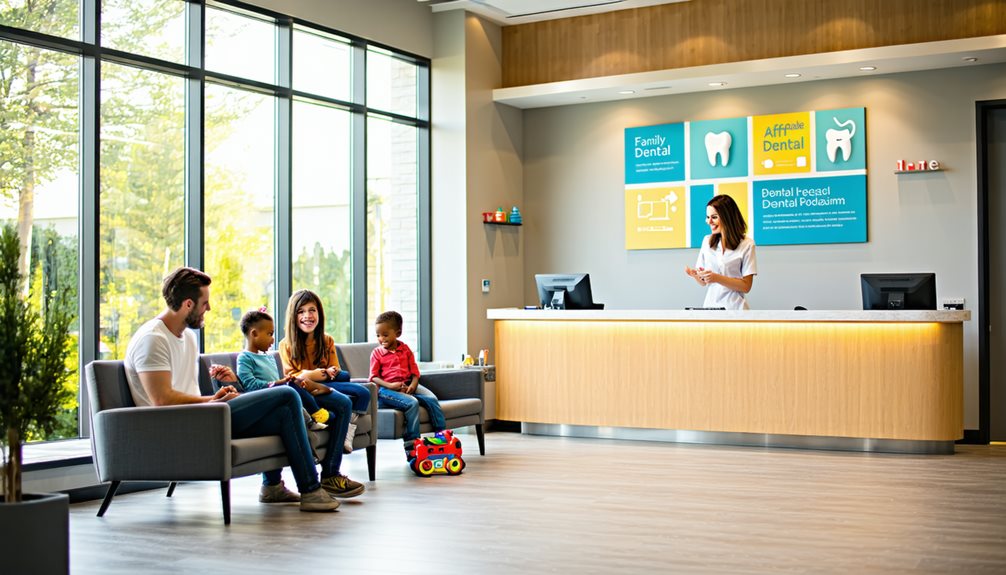
Family dental clinics are cost-effective due to several strategic operational practices. They leverage economies of scale, reducing treatment costs through streamlined processes and better supplier negotiations. Thorough care packages enhance efficiency by bundling services, maximizing savings for families. Preventive care approaches guarantee early detection of issues, reducing expensive future treatments. Clinics also provide affordability through family discounts, loyalty programs, and sliding scale fees based on income. In-house services minimize costly referrals to specialists, maintaining competitive pricing for quality care. Flexible payment plans further ease the financial burden, guaranteeing continued access. For a thorough understanding, explore further details.
Lower Treatment Costs
Taking into consideration the economic constraints many families face, family dental clinics offer significant advantages by providing lower treatment costs compared to private dental practices. This cost efficiency results from streamlined operational models and economies of scale that clinics can leverage. Family dental clinics often negotiate better terms with suppliers, enabling them to procure materials at reduced prices.
Furthermore, their partnerships with dental insurance providers can further diminish the financial burden on patients, guaranteeing more widespread treatment accessibility.
The incorporation of state-of-the-art technology in these clinics facilitates efficient treatment processes, reducing the time and labor costs associated with traditional practices. This technological integration not only enhances the quality of care but also minimizes overhead expenses, allowing clinics to pass on these savings to patients.
Additionally, family dental clinics typically have a higher patient turnover, which increases their revenue stream and enables them to offer competitive pricing models without compromising service quality.
In essence, family dental clinics represent a paradigm shift in dental care accessibility. By effectively balancing cost and care, they provide a sustainable solution for families seeking extensive dental services.
This innovative approach not only addresses economic barriers but also guarantees that quality dental care remains within reach for all families.
Family Discounts Offered
Family dental clinics frequently implement family discount programs to further enhance affordability and accessibility of dental care. By offering family packages, clinics can provide significant savings for households seeking extensive oral health services.
The strategic use of loyalty programs not only encourages regular visits but also fosters long-term relationships between the clinic and the patient, enhancing both preventive care and customer satisfaction. These initiatives are particularly beneficial for families seeking to manage healthcare costs efficiently.
Consider the following emotional benefits:
-
Peace of Mind: Knowing that your family’s dental health is secured through affordable packages can alleviate the stress of unexpected expenses.
-
Inclusion: Family packages guarantee that every member, regardless of age, receives quality care, promoting a sense of unity and collective well-being.
-
Commitment: Loyalty programs reward consistent care with additional discounts, reinforcing a commitment to maintaining ideal oral health.
Comprehensive Care Packages
Family dental clinics are increasingly adopting extensive care packages that encompass a range of bundled dental services.
These packages are designed with a preventive health focus, aiming to address routine check-ups, cleanings, and early interventions as part of an integrated approach to oral health.
Bundled Dental Services
Bundled dental services, also known as extensive care packages, offer a streamlined approach to oral healthcare by combining multiple treatments and procedures into a single, cohesive plan.
These service packages are designed to maximize both efficiency and cost-effectiveness, making them highly appealing to families seeking thorough dental care solutions. By integrating various dental procedures, patients benefit from a holistic treatment strategy tailored to their unique needs, leading to enhanced outcomes and greater satisfaction.
The advantages of bundled services extend beyond mere convenience. For those seeking innovation in dental care, the structured approach of service packages guarantees:
-
Cost Savings: By consolidating multiple services into one package, patients often experience reduced overall costs, avoiding the financial burden of separate treatments.
-
Time Efficiency: A coordinated schedule minimizes the need for multiple appointments, reducing the time patients spend traveling and waiting.
-
Thorough Care: Bundled services facilitate a thorough approach, allowing for consistent monitoring and timely interventions that may prevent complications.
Incorporating modern technologies and techniques, bundled dental services represent a forward-thinking solution that aligns with the evolving demands of healthcare consumers.
This innovative model not only addresses financial considerations but also guarantees a more seamless and effective dental care experience.
Preventive Health Focus
Preventive health focus, as embodied in thorough care packages, emphasizes proactive measures to maintain ideal oral health and prevent the onset of dental issues. Family dental clinics strategically design these packages to integrate routine services such as oral hygiene instruction and regular check-ups, which are pivotal in early detection and management of dental anomalies. This approach not only curtails the progression of potential problems but also aligns with innovative healthcare models that prioritize prevention over treatment.
Comprehensive care packages are methodically structured to include essential services like scaling, fluoride treatments, and X-rays, thereby promoting peak oral hygiene. Regular check-ups serve as critical touchpoints for dental professionals to assess oral health status and implement timely interventions. This systematic approach guarantees that minor issues are addressed before they escalate into significant, costlier complications, thereby embodying both efficacy and economy.
Moreover, the integration of personalized preventive strategies within these packages exemplifies a forward-thinking ethos, encouraging individuals to take an active role in their dental health.
Preventive Care Emphasis
An effective strategy for reducing long-term dental costs is the emphasis on preventive care, which plays an essential role in maintaining oral health.
Family dental clinics often focus on preventive education and oral hygiene to mitigate potential issues before they develop into costly treatments. By instilling good habits early through regular check-ups and personalized guidance, these clinics foster a proactive approach to dental care.
This not only benefits patients but also considerably lowers healthcare expenses over time.
The importance of preventive care is underscored by three compelling reasons:
-
Early Detection: Routine assessments enable the early identification of dental problems, reducing the need for invasive procedures.
-
Cost Savings: Preventive measures, such as fluoride treatments and sealants, are more economical compared to expensive restorative treatments like crowns or root canals.
-
Overall Health Benefits: Maintaining oral hygiene can prevent systemic health issues linked to poor dental care, such as heart disease and diabetes.
Flexible Payment Plans
Family dental clinics not only emphasize preventive care but also recognize the importance of making dental services financially accessible. In today’s economic landscape, payment flexibility has become an essential aspect of healthcare delivery.
By offering a range of flexible payment plans, they guarantee patients receive necessary dental care without the burden of immediate financial strain.
Innovative strategies such as installment plans and sliding scale fees are central to this approach.Installment plans allow patients to spread the cost of treatments over a set period, making high-quality dental care attainable without compromising household budgets. Sliding scale fees adjust the cost of services based on the patient’s income, ensuring that financial constraints do not obstruct access to essential dental procedures.
Additionally, many family dental clinics collaborate with insurance providers to maximize benefits for their patients. They often offer in-house membership plans that provide discounts on various services, further exemplifying their commitment to affordability.
These payment solutions not only enhance patient satisfaction but also guarantee continuity of care, as financial barriers are minimized. This innovative focus on affordability underscores the clinics’ pivotal role in promoting community dental health.
Reduced Specialist Fees
Family dental clinics greatly lower specialist fees by offering in-house specialist services, thereby eliminating the need for costly external referrals.
These clinics often provide extensive care packages that bundle various services, allowing for a more cost-effective approach to dental care.
Additionally, their focus on preventive care helps in reducing long-term dental costs by addressing potential issues early.
In-House Specialist Services
In-house specialist services within dental clinics offer a strategic advantage by reducing the fees typically associated with external referrals. The integration of in-house orthodontics and dental specialists within the clinic premises allows for a streamlined approach to patient care.
By eliminating the need for external consults, patients benefit from a cohesive treatment strategy that is both efficient and economically viable. This innovation not only reduces logistical burdens but also enhances the overall patient experience.
Consider the following advantages:
-
Cost Savings: Patients avoid the inflated costs of external specialist consultations, as in-house services provide competitive pricing structures. The centralized approach allows clinics to offer bundled services at reduced rates.
-
Enhanced Coordination: Having dental specialists in-house guarantees seamless communication between general dentists and specialists, resulting in a unified treatment plan that minimizes delays and maximizes outcomes.
-
Patient Convenience: With all services under one roof, patients experience reduced travel time and fewer appointment scheduling conflicts, fostering a more patient-centric care model.
Emphasizing the benefits of in-house specialist services highlights the transformative potential of family dental clinics. This holistic approach not only redefines cost-efficiency but also sets a benchmark for innovative patient care solutions in the dental industry.
Comprehensive Care Packages
Building upon the advantages of in-house specialist services, extensive care packages further enhance the cost-effectiveness of family dental clinics. These packages are meticulously designed to provide patients with thorough examinations and integrated treatments, guaranteeing that all aspects of oral health are addressed in a streamlined manner.
By offering a wide array of services under one roof, family dental clinics can reduce specialist fees and eliminate the need for referrals to external providers, thereby lowering overall patient expenses.
Thorough care packages typically encompass a range of diagnostic and therapeutic services, including routine check-ups, advanced imaging, and specialized procedures. This holistic approach to dental care allows for early detection and prompt management of potential oral health issues, minimizing the need for costly and extensive interventions in the future.
Furthermore, by consolidating services, clinics can enhance resource allocation, which translates to more competitive pricing for patients.
The integration of treatments within these packages guarantees that patients receive coordinated care tailored to their unique needs. This approach not only enhances the quality of care but also fosters a collaborative environment where dental professionals work in tandem to achieve the best outcomes, thereby reinforcing the cost-effective nature of family dental clinics.
Preventive Care Focus
Emphasizing preventive care within family dental clinics is a strategic approach to reducing specialist fees and enhancing patient affordability. By focusing on preventive education and routine check-ups, these clinics aim to curb the progression of dental issues that often necessitate costly specialist interventions.
Preventive care not only mitigates the risk of severe oral health problems but also promotes a culture of proactive health management among patients, which is critical in minimizing long-term costs.
-
Empowerment Through Education: By engaging patients in preventive education, family dental clinics empower individuals to take charge of their oral health, reducing the likelihood of needing specialist care.
-
Routine Check-ups as a Shield: Regular dental visits enable early detection of potential issues, allowing for timely intervention and reducing the complexity and cost of treatment.
-
Cost-Effective Patient Management: By prioritizing prevention, family dental clinics offer a cost-effective model that benefits both the patient and the healthcare system by alleviating the financial burden associated with specialist fees.
In an era where healthcare costs are escalating, the innovative focus on preventive care by family dental clinics underscores their role as pivotal players in fostering sustainable, affordable oral health solutions.
Frequently Asked Questions
Do Family Dental Clinics Accept Dental Insurance Plans?
Family dental clinics typically accept a variety of dental insurance plans, providing flexible insurance coverage options. These clinics often offer innovative payment options to accommodate diverse financial needs, ensuring accessibility and extensive care for families seeking dental services.
What Are the Clinic’s Hours of Operation?
The clinic’s hours of operation are designed to enhance clinic accessibility and offer appointment flexibility. Typically, family dental clinics are open weekdays with extended evening hours and weekends, accommodating diverse schedules and promoting innovative patient-centric care.
How Often Should My Family Visit the Dentist?
For ideal oral health benefits, it is recommended that families schedule regular checkups every six months. These routine visits enable early detection of dental issues and promote preventive care, fostering innovative approaches to maintaining dental wellness.
Are Emergency Dental Services Available at Family Dental Clinics?
Yes, many family dental clinics offer emergency care services, addressing urgent dental procedures efficiently. These clinics are equipped to manage a range of emergencies, ensuring timely intervention and thorough treatment for diverse dental issues faced by families.
Do Family Dental Clinics Offer Orthodontic Treatments?
Family dental clinics typically offer diverse orthodontic options, including braces and aligners. These clinics often prioritize treatment affordability, providing flexible payment plans, thereby ensuring accessible and innovative solutions for patients seeking thorough orthodontic care within a family-oriented setting.
Conclusion
Family dental clinics demonstrate cost-effectiveness through several strategic approaches. Lower treatment costs are achieved by integrating extensive care packages that emphasize preventive care, thereby mitigating future expenses. Family discounts further reduce financial burdens for households. Flexible payment plans offer financial accessibility, while reduced specialist fees decrease overall treatment costs. These clinics provide a holistic and economically advantageous solution, ensuring quality dental care is accessible to a broader demographic, consequently enhancing oral health outcomes across communities.

