
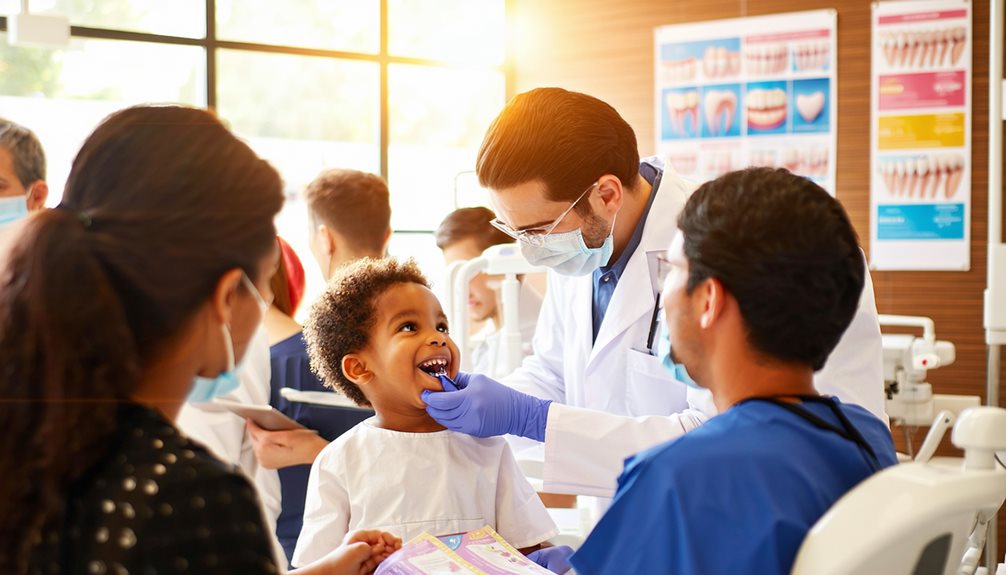
Steering dental care without insurance involves utilizing community resources and strategic financial planning. Community dental clinics offer low-cost care, leveraging collaborations and outreach programs to serve uninsured populations. Dental schools provide affordable treatment through student clinics adhering to professional standards. Discount dental plans and government assistance programs, such as Medicaid and Medicare Advantage, can offer significant savings. Nonprofit organizations deliver preventive and essential care to underserved groups, often through innovative solutions like mobile clinics. Open communication with dentists can facilitate customized financial arrangements, enhancing access to necessary dental treatments. More options and insights are available to explore.
Community Dental Clinics
Community dental clinics serve as an essential resource for individuals seeking affordable oral health care without insurance. These clinics are pivotal in providing affordable services through extensive community outreach initiatives, ensuring access to essential dental care for underserved populations.
By leveraging a model that emphasizes preventative care and education, these clinics address the oral health disparities prevalent in low-income and uninsured demographics.
Through innovative approaches, community dental clinics have enhanced their service offerings, integrating advanced diagnostic tools and evidence-based treatments into their practice to improve patient outcomes. These clinics often collaborate with local health organizations and government bodies to secure funding and resources, enabling them to offer services at reduced costs or on a sliding scale, based on a patient’s financial capacity.
Moreover, community outreach plays a critical role in increasing awareness about oral health and the availability of services. By engaging with the community through educational workshops and health fairs, these clinics foster a culture of proactive dental care, encouraging regular check-ups and early intervention.
As a result, community dental clinics not only provide immediate relief but also contribute to the long-term oral health of the communities they serve.
Dental Schools and Programs
How can individuals without dental insurance access affordable care while also contributing to their education? Dental schools and programs offer a mutually beneficial solution through student clinics. These institutions integrate clinical training into their dental education curriculum, allowing students to gain hands-on experience under the supervision of licensed professionals. This model not only supports the development of proficient dental practitioners but also provides affordable care options for patients.
Student clinics are a pivotal component of dental education, offering a range of services typically at reduced costs compared to private practices. Treatments such as cleanings, fillings, and even more complex procedures are performed by students, ensuring adherence to stringent educational and professional standards. This symbiotic arrangement enhances the learning experience while addressing the dental care needs of underserved populations.
The innovative structure of student clinics allows them to operate as centers of excellence where emerging dental technologies and techniques can be implemented. This fosters an environment of continuous improvement and adaptation to advancements in dental science, aligning with the expectations of an audience keen on innovation.
Discount Dental Plans
Maneuvering the landscape of dental care without insurance can be challenging, but discount dental plans offer a viable alternative by providing reduced rates on various dental services.
These plans operate on a membership model, where participants pay an annual or monthly fee to access a network of dentists offering discounted services. Unlike traditional insurance, discount dental plans do not have deductibles or co-pays, and they typically offer immediate benefits upon enrollment.
When considering discount plan comparisons, it is essential to evaluate the breadth of the provider network, the specific services covered, and the percentage of discounts offered. Many plans provide savings on routine exams, cleanings, and more complex procedures such as fillings and root canals.
Membership savings can vary considerably, with discounts often ranging from 10% to 60% depending on the service and participating provider.
This innovative approach to dental care financing allows individuals to customize their dental care needs while maintaining cost efficiency. The absence of pre-existing condition limitations makes discount dental plans particularly appealing to those who may face higher costs in traditional insurance models.
As a result, discount dental plans serve as an effective mechanism, enhancing access to necessary dental care without the burden of conventional insurance premiums.
Government Assistance Programs
Maneuvering dental care without insurance can be intimidating, but several government assistance programs are designed to alleviate this burden by providing essential dental services to underserved populations.
Medicaid, a state and federally funded program, is pivotal in offering dental care to eligible low-income individuals and families. Medicaid eligibility varies by state, with different criteria for children, adults, and pregnant women. Many states extend extensive dental benefits to children under the Early and Periodic Screening, Diagnostic, and Treatment (EPSDT) benefit.
However, adult dental coverage under Medicaid is often limited, emphasizing the need for policy innovation to expand services.
For seniors, Medicare coverage presents a unique challenge, as traditional Medicare does not typically cover dental care. However, Medicare Advantage plans, an alternative to traditional Medicare, often include dental benefits, providing an innovative solution for elder dental care. These plans are offered by private insurers and may cover services ranging from routine check-ups to more extensive procedures.
The integration of government assistance programs into dental care strategy necessitates an understanding of eligibility criteria and available benefits.
Nonprofit Dental Organizations
In addition to government assistance programs, nonprofit dental organizations play a significant role in bridging the gap for uninsured individuals seeking dental care. These entities leverage nonprofit services to provide essential treatments, preventive care, and educational resources.
By focusing on underserved populations, they mitigate barriers to access, ensuring that oral health disparities are addressed.Nonprofit organizations often operate through a combination of volunteer opportunities and charitable donations, harnessing the altruistic spirit of dental professionals and the community at large.
These strategies allow for a dynamic response to the evolving needs of diverse populations. Evidence indicates that such models improve oral health outcomes and enhance public awareness about dental hygiene.
Moreover, volunteer opportunities within these organizations not only fulfill a critical societal need but also encourage professional development and community engagement among dental practitioners. As the demand for affordable dental care rises, nonprofit dental organizations continue to adapt and innovate, expanding their reach and impact.
Such efforts are pivotal in creating sustainable solutions for individuals without insurance, ultimately fostering a healthier society.
Negotiating With Local Dentists
For individuals without dental insurance, negotiating with local dentists can be a viable strategy to obtain affordable care. Engaging in open discussions with dental professionals about flexible payment plans can considerably reduce the financial burden while maintaining peak oral health.
Many dental practices are increasingly receptive to personalized arrangements, particularly in an era where patient-centric care is paramount. By offering transparent communication and a willingness to explore mutually beneficial solutions, patients can leverage these negotiations to secure necessary treatments.
Evidence suggests that direct negotiation empowers patients, fostering a collaborative relationship with dental providers. This approach not only addresses immediate financial concerns but also supports long-term oral health outcomes.
Patients should consider requesting itemized estimates and discussing potential discounts for upfront payments or bundled services. Such strategies can lead to innovative, cost-effective solutions tailored to individual needs.
Additionally, some dentists may offer sliding scale fees based on income or provide access to in-house membership plans that offer regular check-ups and discounted services. By proactively discussing these options, patients without insurance can guarantee continuous oral healthcare.
Ultimately, negotiating with local dentists represents an adaptive strategy, aligning with the contemporary emphasis on personalized, accessible healthcare solutions.
Frequently Asked Questions
How Can I Maintain Oral Hygiene Without Regular Dental Check-Ups?
To maintain ideal oral hygiene, utilize advanced flossing techniques to remove plaque effectively. Incorporate mouthwash alternatives, such as hydrogen peroxide rinses, for antibacterial benefits. Prioritize innovative tools like water flossers and electric toothbrushes for thorough care.
What Are Some Home Remedies for Toothache Relief?
For toothache relief, applying clove oil may provide analgesic effects due to its eugenol content. Additionally, rinsing with warm saltwater can reduce inflammation and bacteria, offering temporary relief. Both methods are supported by historical and emerging research.
How Often Should I Replace My Toothbrush if I Can’t Afford Dental Visits?
To maximize toothbrush longevity, it is advisable to replace it every three months. For budget-friendly tips, consider purchasing multi-packs or utilizing subscription services offering discounts, ensuring ideal oral hygiene even when dental visits are unaffordable.
Are There Affordable Over-The-Counter Products for Teeth Whitening?
Affordable over-the-counter products for teeth whitening include whitening strips, which utilize peroxide-based formulas for effective results. Additionally, natural alternatives such as baking soda and activated charcoal provide innovative, evidence-based solutions for individuals seeking cost-effective, at-home teeth whitening methods.
What Are the Risks of Delaying Dental Treatments?
Delaying dental treatments can lead to treatment complications, including infection and pain. Long-term consequences may include tooth loss, systemic health issues, and increased costs. Timely intervention is essential to maintain oral health and prevent progressive deterioration.
Conclusion
In summary, individuals lacking dental insurance can access various cost-effective options to guarantee oral health maintenance. Community dental clinics and dental schools provide affordable care through reduced fees and supervised student services. Discount dental plans offer negotiated rates for services, while government assistance programs may provide subsidies for eligible individuals. Nonprofit organizations often extend free or low-cost dental services to underserved populations. Additionally, negotiating payment terms with local dentists can further alleviate financial burdens associated with dental care.

